
Your building material matters. Our adobes are made by hand and with care, on the same yard that’s been making them for more than fifty years.
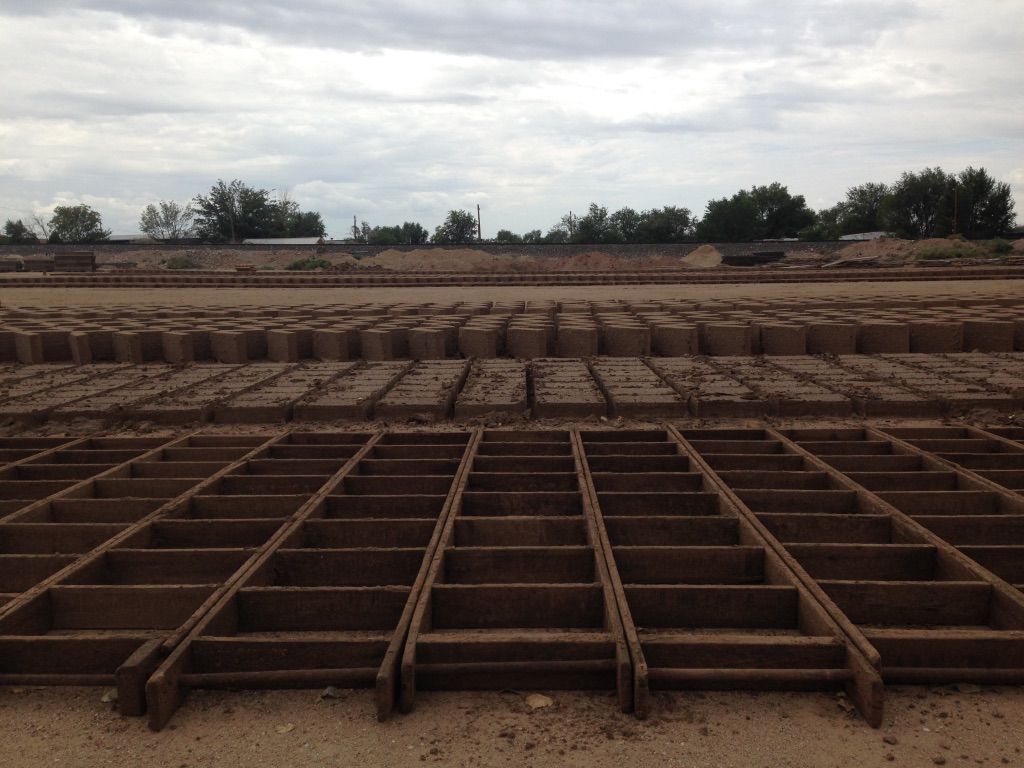
Our adobes are made the old fashioned way. We start with locally sourced soil mix - carefully blended until it has the right ratio of clay, soil and aggregate. We add water, stabilizer when needed and a little straw, then turn it until it's ready to pour. It's poured onto forms custom crafted to make the perfect adobe and hand pulled until it's smooth across the top.
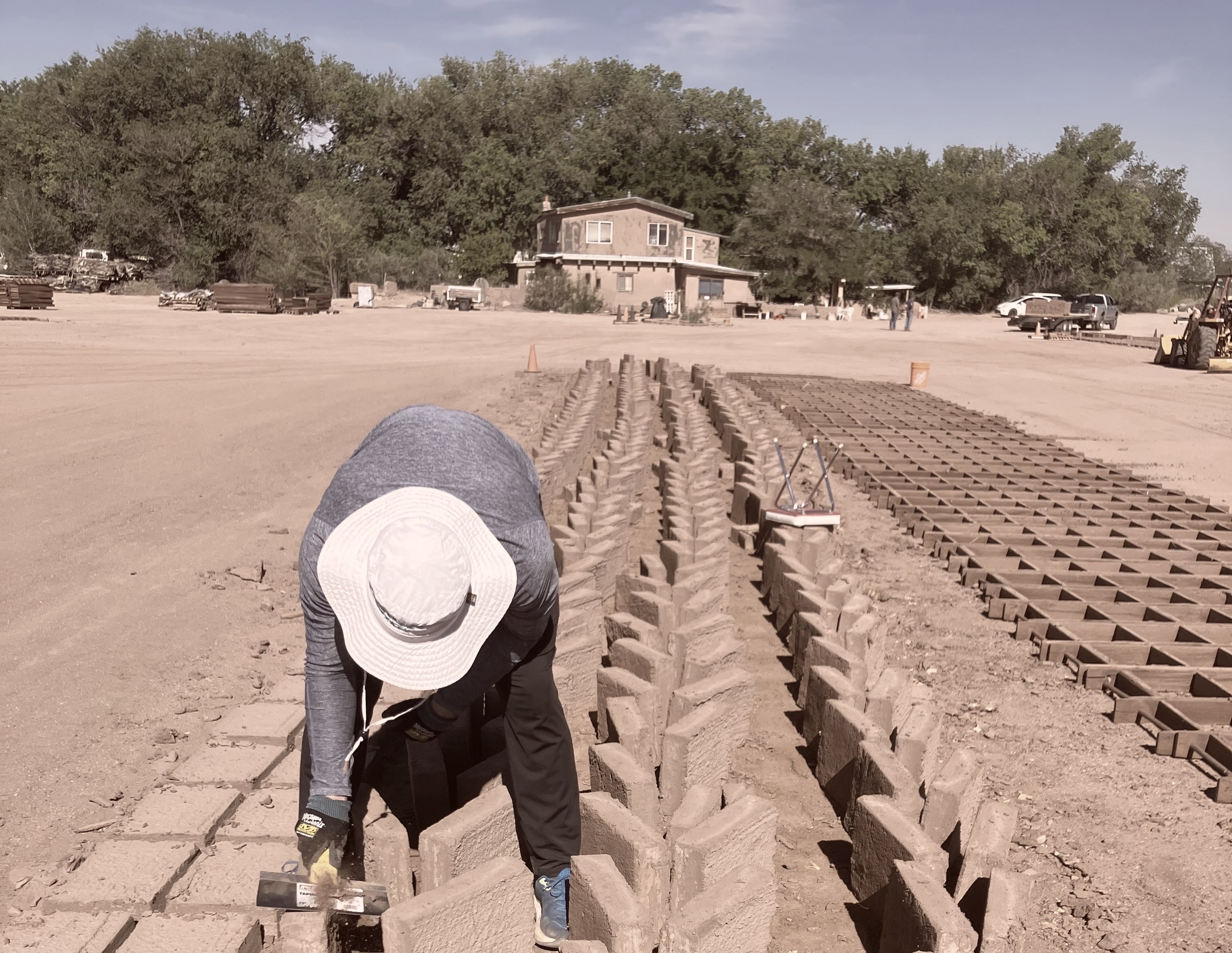
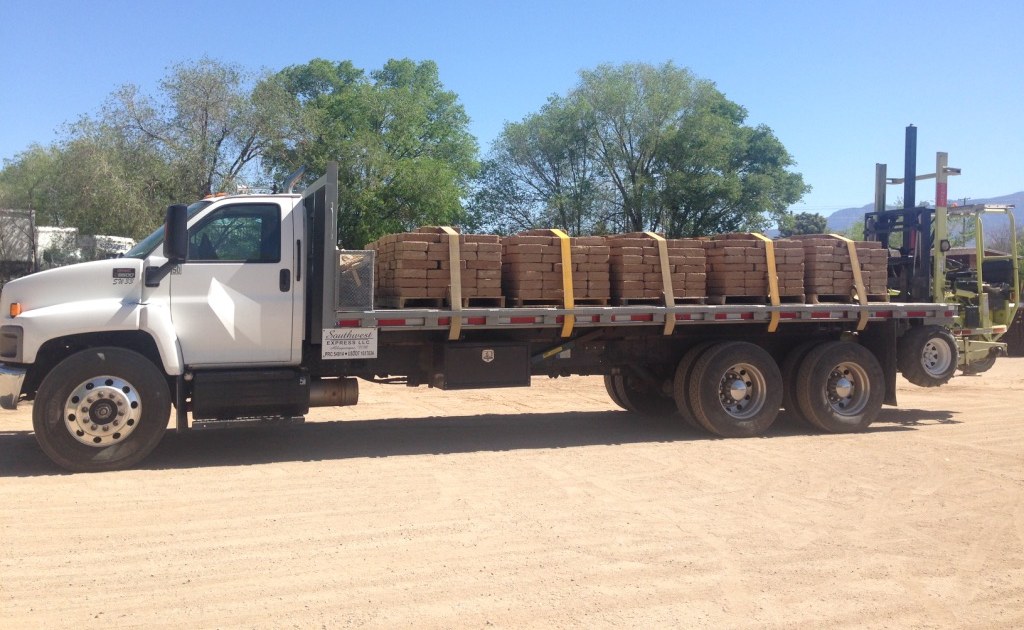
The forms are removed and the adobes then bake under the New Mexico sun until they are ready to be turned, scraped, loaded onto pallets and sent off to your project.
Our adobes are made on the same ground where NM Earth Adobes produced millions of adobes over more than five decades. We were lucky to be trained by the team behind NM Earth, and are proud to follow their same careful and time honed production practices.
If you're lucky you might find a bird or coyote print in our adobes. Don't worry, the prints don't impact the compressive strength, but they do give your blocks character and a sense of place you can't get with any other material.
There are so many reasons to love adobe, see a few of our favorites below. Want to learn more about adobe and whether it is the right material for your project? Reach out here and we'd be happy to share more.
Fired brick and concrete both take a lot of energy to make. Cement production alone is one of the largest industrial sources of CO2 in the world. Our adobes cure using nothing but sun and air, making it one of the most sustainable building materials money can buy.
Adobe's thermal mass absorbs heat during the day and releases it at night, making it an ideal building material for the Southwest. Adobe homeowners enjoy lower utility bills, and some forego HVAC systems entirely.
Adobe is a formally recognized building type, not just a regional tradition. Adobe masonry has its own section in the International Building Code, and New Mexico's Earthen Building Materials Code (14.7.4 NMAC) requires cured adobe units to average a minimum 300 psi compressive strength. We test every batch to this standard. Using adobe is not "alternative building," it is using a standard material that engineers and building officials already recognize, and that has been used by builders for thousands of years.
Adobe buildings in New Mexico have stood for centuries, not as museum pieces, but as homes. Taos Pueblo's adobe structures date back roughly 1,000 years and are still inhabited today, one of the oldest communities in the United States. San Miguel Mission in Santa Fe, with adobe walls up to five feet thick, is often cited as the oldest church building in the continental U.S., dating to around 1610. When you build with adobe, you are building a structure that will be standing for generations.
Building with adobe shows that you believe a building material can be more than a problem to cover up. By the nature of how they are made our adobes are uniform yet stunningly unique. You know a true adobe wall when you see one.